Uncategorized

Can Kickstarter Do What the Philippine Government Could Not?

This is the third of a three-part series on how to grow our design exports. Part 1 talked about the inadequacies of the prevalent strategies to grow our $1.5 billion in creative exports. Part 2 about how technology can play a role in the competitiveness of our local fashion industry, which will be overwhelmed by intense competition from foreign brands. This part talks about a simple experiment we’re doing at AVA to help break into the US market. A similar version of this post appeared on the Pollenizer blog

“They Just Don’t Get It”

The Aquino administration wants to grow our manufacturing sector. After all, no emerging market made the leap from third world to first without having a solid export-oriented manufacturing base. Unsurprisingly, our exports are paltry compared to our Southeast Asia neighbors.

But our creative exports – products in the fashion, jewelry, home accessories, and furniture categories – are growing double digit each year, after a slump during the global financial crisis. This is driven by a renewed interest from foreign buyers in unique merchandise from this part of the world – a far cry from the cheap knockoffs you see in China.

The problem: our export promotion strategy is still heavily reliant on the trade show model to market our creative exports. For décades, Philippine design products have relied on trade shows like Manila FAME to attract international buyers. For manufacturers lucky enough who have built a following among international buyers over the decades, getting traction is expected. But unfortunately for most mid-sized companies, local trade show traffic still pales in comparison to those in Singapore, Hong Kong, Paris and Last Vegas. Can you see a critical mass of foreign buyers when you go to FAME? The trade show is a 20th century solution in a 21st century world.

Several months back, we offered the organizers of Manila FAME a free workshop on how manufacturers can leverage e-commerce to grow their business. We were also gonna give a free guidebook on the basic platforms (like Etsy and Shopify) to equip them with the right tools. At no cost at all to the government. A junior executive said she’d get back to us. We never heard from her again.

I guess technology isn’t on the priority list of our export-promotion agencies. It’s hard when the very people who claim to want to help local exports “just don’t get it”. I don’t mean to put anyone down here. But that’s the truth. And I suspect it’s an assessment shared by many of our local exporters. If any DTI official gets to read this, please do know that our doors are always open and we will be more than happy to contribute to the local industry.

Doing it Ourselves

So what to do? We decided to reach potential customers in the US via a direct-to-consumer platform that leverages crowd funding, e-commerce and a lean supply chain. Enter Kickstarter.
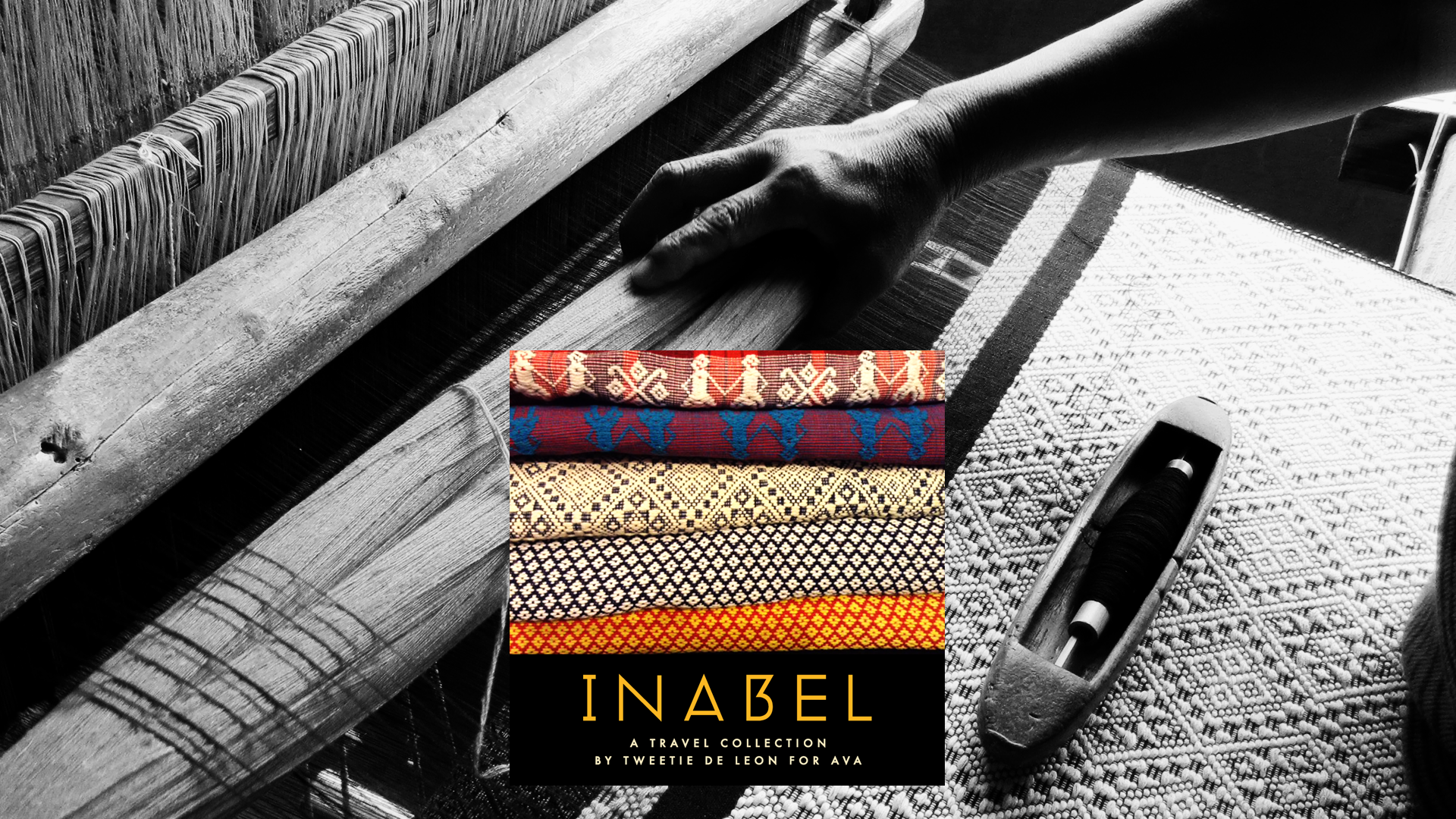
INABEL KICKSTARTER-FINAL

Kickstarter allows people all over the world to contribute to creative projects. To be eligible to claim the fund, a project must meet its stated funding goal.

In exchange, people who pledge get rewards – often in the form of products that they’ve supported. The method is commonly known as “crowdfunding”, which essentially works by pooling small contributions of thousands of people within an online platform. Kickstarter is the world’s biggest crowdfunding platform, having funded more than $1 billion to date.

The Opportunity

The fashion e-commerce in the United States will be a $88 billion market by 2016. Countries in Southeast Asia stand to benefit a lot. The Philippines alone exports over $1.5 billion of apparel, accessories, and furniture to the U.S. Vietnam, Thailand, and Indonesia export even more. And these exports create local jobs, that in turn, increase local demand for goods and services. Yet, these export industries have remained relatively offline.

Of course, our resources were constrained: we had a small team and we still had the local business to operate. What we have, though, is merchandise. These weren’t just your typical fast-fashion products found in a Zara or H&M. These were unique, handcrafted, artisan-inspired products found nowhere else in the world. These were products with stories. And most of all, they weren’t on Amazon.

So what’s a good “minimum viable product” for an international launch? Whatever we chose, it had to follow 3 criteria: it had to be cheap, gave us distribution, and got us maximum learning for minimal effort.

We had a variety of options, from Etsy and Ebay to Fab and Shopify. We decided to go with launching a campaign on Kickstarter.

Next, we’ve always wanted to work with traditional textiles that not only had a unique product story, but more importantly provided a steady income to the many rural communities in the Philippines. Unfortunately, the local market doesn’t value these textiles, with most consigned to museums or left as ornamental displays in gift shops. Filipino heritage products wasn’t “cool” to the emerging middle class in the same way Prada was cool.

Nonetheless, we made a bet that this would be a story that resonated to the maker movement on Kickstarter. So we set out to work with Al Valenciano, who runs a community of artisan weavers in Ilocos, in the Northern Philippines, and celebrity designer Tweetie de Leon-Gonzalez, whom we’ve had the pleasure of working with last year. We chose the traditional textile called inabel, known for its color, vibrance and versatility. Inabel has been around for centuries.

The Collection: Tradition Meets Modernity

Inabel has a magical quality. In sharp contrast to factory-produced goods, the inabel fabric is handwoven on ancient looms by Filipino women. It takes 2 weeks just to set up a pattern on a loom and a loom can produce only about 2 meters of fabric a day. The process is intricate and time-consuming, the result, breathtakingly beautiful.

Inabel is intimately connected to the people who create them. The tradition of weaving is passed down from one generation to another along with the stories that emerge from the fabric’s patterns. The fabric itself is an expression of the culture, identity and history of the ancient Filipinos, often depicting the harvest cycle and symbols of prosperity. The fabric is present in all the key moments of a person’s life, often presented as a gift during birth, a marriage, and death.

Today, there are less than 10 inabel master weavers alive. Within a generation, the inabel tradition may vanish – unless we do something about it. To keep the craft alive, we needed a more sustainable path-to-market for this amazing fabric. 

Philippine design has a compelling story. How do we share it?

Philippine design has a compelling story. How do we share it?

Tweetie designed a wonderful collection of modern products such as iPad cases, weekender bags and accessory kits fashioned out of inabel. We traveled to Ilocos, shot a video, and told our story. As far as we know, it’s the first time a traditional Filipino textile has been featured on Kickstarter.

  • Artisan design. Tweetie loves to describe these products as “anti-fast fashion”. We wanted to create modern products that are infused with our identity as a people. We chose travel as a theme because the modernity of travel, combined with the heritage of inabel make for a fascinating contrast.
  • Form and function. We’ve given tremendous thought to the details, from selecting the right cotton blends to choosing the inabel pattern to use. We’ve optimized for multiple uses. For instance, the dopp kit can also double as a shoe bag, while the iPad case has a retractable leather strap to instantly turn it into a clutch bag.
  • Timeless craftsmanship. It takes 2 weeks just to set up a pattern on a loom and a loom can produce only about 2 meters of fabric a day. The process is intricate and time-consuming, the result, breathtakingly beautiful.
  • No excessive retail markups. Because we’re bypassing layers of middlemen and going direct-to-consumer via e-commerce, you can get these products at a price way below the usual retail price in a New York department store.

The result: products that fit the present, while reminding us of the past.

This is as live a customer development story as it can get. AVA’s Kickstarter campaign has raised close to 90% of our funding goal with over 10 days to go. With your help, we can make it.

If you have a minute or two, we welcome you to be part of the campaign to bring Filipino products to a global stage. When you pledge, you’re sure to get an inabel product of your choice (my personal favorite is the iPad case). And as always, please share with friends abroad to help keep the tradition of inabel alive for generations to come.

Standard
Uncategorized

The End of Philippine Fashion. And What We Can Do To Save It.

This is the 2nd part of a 3-part series on our creative industries. Part 1 talked about the inadequacies of the prevalent strategies to grow our $1.5 billion in creative exports. This part talks about how technology can play a role in the competitiveness of our local designers, brands and retailers. It’s related to a broader conversation on the Philippine innovation economy.

"It was H&M, mum." Photo credits: independent.co.uk

“It was H&M, mum.” Photo credits: independent.co.uk

Local brands whisper “H&M is coming” in the same way as the Starks of Winterfell do: they know it will be unstoppable, it will last long, and many will perish.

And then, there’s the Japanese. We all know about Fast Retailing’s very public intention to create the biggest fashion company on the planet by 2020. Japan is our biggest trading partner, so you can count on the Philippines to be a major part of this strategy.

Finally, there’s the broader conversation on ASEAN 2015. The big step in creating a single market in Southeast Asia will inevitably lead to several new brands from around the region entering the local market. And our local champions are seriously outgunned. I couldn’t find data for fashion, but take banking: BDO is the biggest local bank, but is only #19 in Southeast Asia.

Does the increased competition mean the end of Philippine fashion? What will happen to designers, manufacturers, and retailers when the market is flooded with cheap products and more recognized brands? We’re seeing it happen in real time in Brazil. The competition won’t just come from offline players. Even China’s Alibaba is investing in department stores.

The three segments of the market will be affected in different ways:

Independent designers & small businesses will be hit the worst. Brands who rely on bazaars and consigning in department stores will find it harder to compete. The best designers will have a stable clientele for couture, but will find it difficult to scale with ready-to-wear. The rest will be more inclined to work with the bigger houses than start their own label. Contract manufacturers who rely on wholesale orders will see customers move to Vietnam and Indonesia, who are both employing even more aggressive textile export strategies. Cambodia is fast catching up. Just look at the ever dwindling traffic of foreign buyers in Manila FAME each year and the number of closures in the 2nd floor of Greenbelt 5.

The Sub-Billion Players (those with more P100 million in sales, but less than P1 billion) will find it harder to grow. Brands like Folded & Hung and Gingersnaps will slug it out over retail space. Mall operators will prefer leasing to anchor brands, or allocate the prime space to their own franchises (like SM’s Forever 21 and Uniqlo). Because the sub-billion brands don’t have the scale of the bigger players, they will have a harder time competing on price. They will source cheaper merchandise in China, further deteriorating product quality, which will turn off even more consumers. It’ll be a vicious spiral. There will be some consolidation in this space.

The Billion Peso Club (P1 billion+ in sales) will handle the onslaught, but they know the era of easy growth (by simply opening new stores and slapping celebrities on billboards) is over. For them, the smart bet is to pursue an international presence as fast as possible by bringing their brands abroad or by positioning themselves as local partners for foreign brands. Golden ABC (the parent company of Penshoppe) is implementing an Inditex-like strategy: open overseas stores and build a portfolio of brands. Bench is bringing in foreign brands (Aldo, Pedro, etc) while extending its iconic brand to new categories (skin care, salons, etc). This strategy, of course, makes sense given the small size of the local market and resources controlled by these companies.

Online retail will empower all these players. My humble thesis is that e-commerce holds the key to exporting Philippine design. An online strategy can help our local brands 1) remain competitive locally and 2) pursue breakout opportunities internationally

Vania Romoff launched an online-only collection on AVA.PH

Vania Romoff launched an online-only collection on AVA.PH

How do we think about this new normal for Philippine fashion?

1. Think Stories, not Stores. The primary unit of analysis in retail used to be the physical store. Today, it’s the customer story. How do we create a seamless brand experience for consumers regardless of the touchpoint – whether it’s in the mall, on laptops, or on mobile phones?  For example, Warby Parker started as an online eyewear brand. Last year, it opened its first set of brick-and-mortar showrooms where customers can try out different frames and order on an iPad.

With the ability of the internet to distribute content all over the world, local brands can tap an international market. At AVA, we’ve gotten a few customers from the United States, Germany, Belgium, Australia, Singapore, Malaysia and Japan. And we haven’t even done any marketing in those countries.

Unfortunately, there’s so much misguided thinking in the Philippines. At a recent public forum, the head of one of the biggest malls in the country said that “online is the biggest threat to our business“. This is alarmist and exaggerated drivel. It’s misguided because it creates a false distinction between online and offline. Alarmist because the shopping mall will obviously not go away (US e-commerce is still less than 10% of total retail, but a large majority use online to guide purchase decisions).

It ignores how new retail technology can be integrated in the store. It’s no longer “online vs offline”, but a choice on how to communicate the brand story in both worlds.  For instance, brands like Marc Jacobs (who is using social media as a form of in-store currency) and American Eagle (who is piloting iBeacon technology) are showing innovative new ways of embedding retail tech in their traditional offerings.

It’s not just about opening an “online store”, but integrating tech into sensible parts of the retail value chain. Walmart’s latest experiment? Using ad tech to cut waste in its media budget.

Tweetie de Leon and AVA partnered to launch a Kickstarter campaign to save the dying inabel fabric.

Tweetie de Leon and AVA partnered to launch a Kickstarter campaign to save the dying inabel fabric.

2. Build Omni-Channel Capability. Omni-channel retail is an infrastructure decision. And thus requires completely new thinking on organization design, marketing, logistics and inventory management. Another fashion brand was hesitant to launch its own online store because management didn’t want to “divert part of the marketing budget from print and outdoor“. And that’s the problem: an e-commerce strategy isn’t a marketing mix decision, but a business unit-level decision that requires its own set of resources.

When I met the chairman of another retailer, his first question was, “can going online be profitable in the first year?”.  (Dear Mr Chairman: Please do not ask Jeff Bezos this question). Yes, if you’re thinking of “going online” as simply putting up a website. It would obviously not be if you view it as an infrastructure decision.

The good news is that the technology is getting cheaper. I can build a shopping app that costs way less than a billboard on EDSA or a print campaign in Preview. Getting educated about e-commerce is free (it’s called Google). The payments and delivery network have been built and getting better each year. And with companies like Rocket Internet and Naspers operating in the country, talent is more widely available.

Brands without a clear e-commerce strategy aren’t being cautious, they’re being lazy.

3. Leverage on Platforms. Think of a platform as a business that empowers other businesses. The iPhone, for instance, is a platform. Apple provides the centralized eco-system, while independent app developers around the world provide the content. Global marketplaces like Etsy and retailers like AHAlife have allowed independent producers from around the world to access consumers far beyond their home country. Etsy for instance did $1.35 billion of gross sales last year. On Amazon, up to 1/3 of products are sold by third party merchants who host their products on Amazon’s distribution centers. Crowdfunding platforms like Kickstarter allow designers to generate pre-orders even before their products hit the market.

With these platforms, Filipino producers can immediately access a global market on day one. The bazaar in Rockwell only gives you a spike during Christmas? No problem. A presence in Etsy helps expand your footprint. What to customize the look of your store, but don’t have the budget? There’s Shopify for that.

4. Slow Down Fast Fashion. Fashion’s deep, dark secret is that sweatshop labor all over the world subsidizes the thirst for fast fashion in the developed world. Sites like Maiyet, Uncommon Goods, and Everlane are all signals of consumers’ desire for a different way of thinking about fashion. The tragedy in Bangladesh helped cast a wider spotlight on this sorry state of affairs. People are now looking beyond the rack and seeing how their purchases are collectively affecting a global supply chain. Brands are looking for authenticity to break through the cynicism. This is good news for our creative industries. We can’t compete with China on price, but we can certainly compete on design and an authentic brand story that explores our rich cultural heritage, our traditional textiles and materials, and our local craftsmanship.

In my next post, I’ll share what we’re doing at AVA to help create a bridge between our local products and the global market.

Standard
Uncategorized

UBER & TRIPID Comply with LTFRB Rules for Ride Sharing Apps

In a bid to avoid an all out war with regulators, ride sharing startups Uber and Tripid have decided to simply comply with the new rules released by the Land Transportation Franchising and Regulatory Board (LTFRB).

The main provision of the new ruling requires all ride sharing apps to prominently display the LTFRB hotline in “every single web page or app page” of the services.

“This is so we can protect the consumer,” says LTFRB chief Jhon Mhichael Luddite. “We invited the Uber and Tripid heads to a very private hearing and though I was impressed with these fine gentlemen, I have to protect the welfare of ordinary Filipinos. I assure the public that no cash or Uber credits were exchanged in these private hearings”


This is satire. Don't know what that means? Google it.

This is satire. Don’t know what that means? Google it.


Other rules require Tripid and Uber to use  “predominantly white and white-ish colors” on all their web pages. “This is because our taxis are white, diba? So as not to confuse the consumer, all these apps must be white too,” Luddite added.

Uber and Tripid representatives have declined to comment on this story.

Slide2


Standard